Most people assume the job ends once a skip bin is collected. However, the real work starts after pickup. By understanding the waste lifecycle process, homeowners and businesses can see how proper disposal supports recycling, compliance, and sustainability across Australia.
At Westgate Bin Hire, every collected bin enters a carefully managed system. As a result, recyclable materials stay in circulation while landfill use stays low.
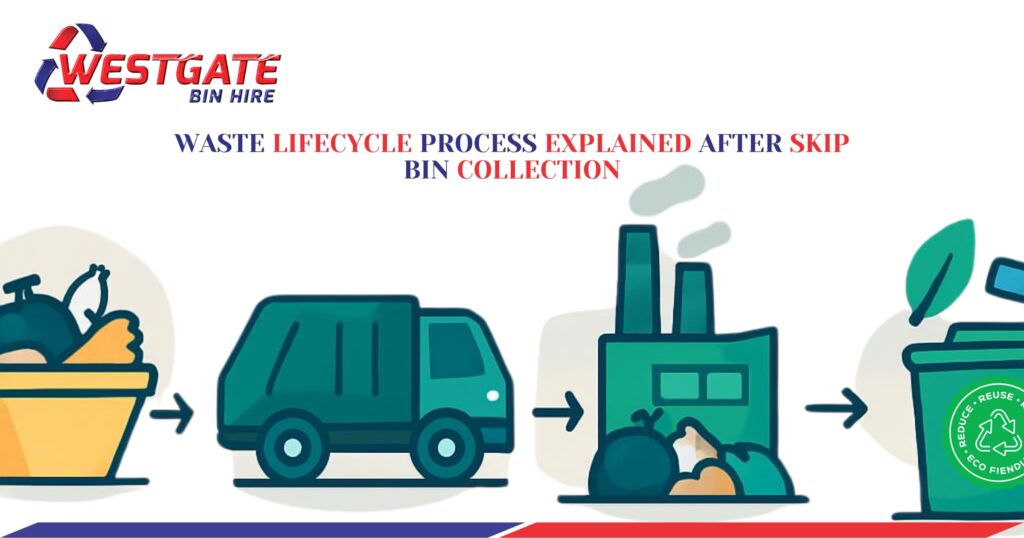
Transport to Waste Facilities
First, once your skip bin is collected, then its transported directly to a waste transfer facility. These facilities operate under strict Australian environmental regulations. Because of this, waste handling remains safe, controlled, and fully compliant. In addition, secure transport helps prevent contamination and illegal dumping.
Waste Lifecycle Process Begins With Professional Sorting
Next, trained staff sort the waste into defined material streams. This step sits at the core of the waste lifecycle process. Concrete, timber, metals, green waste, and general rubbish all get separated with care. Importantly, customers do not need to sort materials themselves. Instead, Westgate Bin Hire manages this process at the facility, which improves accuracy and recycling results.
Recycling and Resource Recovery
After sorting, recyclable materials move to specialised recycling partners. For example, concrete gets crushed for road base, while metals return to manufacturing streams. Meanwhile, green waste turns into mulch or compost. As a result, large volumes of material avoid landfill and support Australia’s circular economy.
Responsible Disposal of Remaining Waste
Still, not all waste can be recycled. When that happens, remaining materials go to approved landfill sites. These sites operate under strict environmental controls that protect soil and groundwater. Because earlier stages recover as much material as possible, landfill volumes remain minimal.
Why the Waste Lifecycle Process Matters
Every stage in this system reduces environmental impact. More importantly, it ensures legal compliance and long-term sustainability. Therefore, choosing a professional skip bin provider directly affects how much waste gets reused instead of buried.
Conclusion
The waste lifecycle process does not end at collection. Instead, it continues through sorting, recycling, and responsible disposal. By choosing Westgate Bin Hire, your waste becomes part of a system that protects the environment while supporting a cleaner future.
📞 Westgate Bin Hire supports responsible waste disposal with efficient and eco-friendly skip bin solutions. Please contact Westgate Bin Hire for more information or to book a skip bin.
